Sans Soucie
Art Glass Studios, Inc.

Since 1976

Our Blog

Archive for the ‘Grapevines & Ivy Designs’ Category

Wine Cellar Door Glass by Sans Soucie Art Glass Studios

January 12th, 2010 by lgannett – Comments (1)

etched glass wine cellar door grape bunch

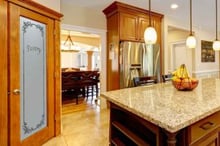
Sans Soucie Art Glass creates a variety of gorgeous etched or frosted, carved and painted glass designs for Wine Cellar Doors in a beautiful array of design styles.  Our  most popular is our “Vineyard Grapes” Series, featuring grapevines and ivy, draped or nestled on various border shapes and styles.

For Wine Cellar Door Glass, the designs are etched and carved on the glass, and the the background area of the glass is left CLEAR, allowing for visibility through the glass, into the wine cellar.  The rich, warm wood colors and textures on the inside of the wine cellar, along with the lighting coming from inside, create the perfect back-drop and setting to really illuminate and ‘bring out” the etched and carved textures in the glass.  When the design is 3-dimensionally sculpture carved into the glass, all the edges of the grapes, leaves and vines within the design will actually pick up the light and will illuminate and have a very bright white three-dimensional “outline”,  and will be “free floating” image in the glass.

wine cellar door glass etched cascadewine cellar door glass etched garland

With additional designs on the way, The Vineyard Grapes Series currently consists of four design styles to choose from:  Cascade, Garland, Trellis and Unfurled.

wine cellar door glass etched trelliswine cellar door glass etched unfurled

As with all etched and carved glass designs by Sans Soucie, each Vineyard Grape design can be sandblasted using three basic sandblast techniques,  with the last offering the option to add color the carved textures.  The different sandblast techniques result in a wide price range, due to the amount of labor and varied levels of design skill required to execute the effect.

solid etched glass grape bunch

The first, most basic and least expensive method is called a SOLID ETCH (see photos).  This technique is just that:  SOLID WHITE.  It’s what’s called a “single-stage sandblast”, in that the entire stencil or template is removed from the glass, all at once, and the design will be sandblasted “overall”, at a faster pace.  This method requires the least amount of skill and is the most common method of sandblasting, and what most people “picture in their minds” when they think of etched or frosted glass.

etched and shaded glass grape bunch

The second, “next level up”, is what we call SURFACE ETCHING AND SHADING.    This is a “multi-stage sandblast” effect, where each and every segment of the design is individually removed and sandblasted, one piece at a time.  The design will NOT be etched SOLID, but areas are “shaded”, which means the etching will delicately and gradually “fade back out” to clear glass.   THIS is where both years of training and practice are required, in order develop the skill needed to create a quality effect.   The highly skilled artists at Sans Soucie Art Glass have been honing their skills and doing this work for many, many years, having created literally thousands of pieces in order to attain the level of quality precision achieved by Sans Soucie Art Glass.

carved and shaded glass grape bunch

The “third level up”, is CARVED AND SHADED.    The “steps” are similar to etching and shading, but the areas are sandblasted longer, to create that 3-dimensional, sculpted texture.  As with any other type of sculpting, it takes a gifted artist to achieve just the right depth at a consistent and correct level for just the right effect.  And don’t forget, we’re working on glass here!  Not clay or stone!  As everyone knows, glass is fragile, and must be “handled with care” to prevent breakage!

carved and painted glass grape bunch

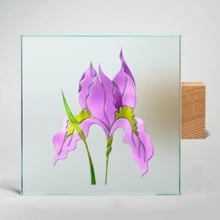
Lastly, the CARVED glass surface can be PAINTED, adding color the design.  This is an additional step in the process that requires a tremendous amount of additional time and labor, but when the piece or project calls for it, and color is desired, the results are well worth it.   Applying color to the carved glass adds a truly stunning effect .. whether it’s a hint of color, or deep, vibrant tones.    The colors are TRANSLUCENT (allowing light, but not detailed images, to pass through; semitransparent), or SOLID (which will block any light from passing thru, perfect for creating effects like the illusion of free floating metal, floating in the glass by applying a solid metallic paint).

Visit our Wine Cellar Door Glass Gallery to see more designs for Wine Cellar Doors!

SandblastingGlass

Also visit our Custom Designs Gallery and a Productions Designs Gallery, where you can view hundreds of pieces, by Type of Piece or Type of Design.  Take a virtual tour of our showroom and read the bio of our principal artist, Chauncey W. Gannett.  There’s even a page with Pricing Examples.  Read about some of our Commercial Commissions and even Request a Quote.  For further details, and to request a custom quote, Contact Us.

Team Sans Soucie Art Glass Studios

Positive & Negative Sandblast Techniques

August 28th, 2009 by lgannett – Comments (0)

At Sans Soucie, we use a variety of different sandblast effects and techniques in our work.  For the most part, the pieces we create are achieved through what’s called “multi-stage sandblasting”, where the design elements are carved, one small part a time, layer upon layer, achieving a multi-dimensional effect in the design.

This grape cluster and leaves are a "multi-stage" sandblast.  Each grape has been sandblasted one at a time.

This grape cluster and leaves are a "multi-stage" sandblast. Each grape has been sandblasted one at a time.

A more common technique used in sandblasted glass, is called a “single stage sandblast”.  It’s “one stage”, in that the entire template is cut and all the elements or portions that will be sandblasted are removed at the same time, then the entire surface is sandblasted at the same time.   Within this technique, are two “effects” or finishes:   They’re what’s referred to as  a “postive” or “negative” sandblast.

The positive sandblast is where the elements within the design remain clear glass and the background area of the glass is solid etched.

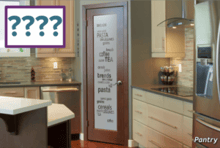
Obviously the negative sandblast provides for obscurity and so this technique is used for the majority of products like pantry or door glass where privacy is desired.

Cabinet Glass.  Left door glass is Positive, right is negative.

Cabinet Glass. Left door glass is a positive sandblast, right panel is negative.

"Pegasus" door glass design.  Negative sandblast.

"Pegasus" door glass design. Negative sandblast.

"Pegasus" door glass design, positive sandblast.

"Pegasus" door glass design, positive sandblast.

Etched Glass, Carved Glass. What do you mean?

August 18th, 2009 by lgannett – Comments (0)

The term “etched glass” can have a number of different meanings, pointing to a number of different “etching techniques”.

Most people have a basic picture in their minds when they hear the term “etched glass” .. basically visualizing that the glass surface has been turned white!  It’s  no longer “clear”.  This is true, it’s  just that there are a number of different techniques that can be used to achieve this effect,  AND there’s a number of different effects or “looks” of etched glass, all different, but all falling under the definition “etched glass”.

“Etched glass” is a generic term for the treatment of the glass surface to diffuse transmitted light, reduce glare and give the glass a white, frosted appearance.  A couple detailed definitions include:

“Glass decorated through the process of sandblasting or the use of hydroflouroc acid”. (source picassomio.com).

“A type of glassware whose decorative design has been cut into the surface by the corrosive action of an acid.  An etched-glass surface may be either rough and frosted or satiny smooth and translucent, depending largely on the composition of the glass and the amount of time the glass is exposed to the acid.” (source britannica.com).

The method used by Sans Soucie, is sandblasting, whereby we are etching the surface of the glass by spraying it with compressed air and sand.  It takes a very gifted and well trained hand to be able to achieve a level of quality in the art of sandblasted glass!

Sans Soucie Glass artist sandblasting waves into a glass panel that will become a window.

Sans Soucie Glass artist sandblasting waves into a glass panel that will become a window.

But then there’s further meaning for us, as we describe our sandblast techniques and effects.  When we use the term “etched”, we really mean “surface etched”, where we have sandblasted the glass enough to effect the “surface only”.    “Etching” does not go deep into the glass and creates a one-dimensional effect.

A cluster of grapes that has been "etched & shaded".   This method provides wonderful "definition" or "depth" of the images within the deign, but they are "two dimensional" only.

A cluster of grapes that has been "etched & shaded". This method provides wonderful "definition" or "depth" of the images within the deign, but they are "two dimensional" only.

When we “go deeper” into the glass, we call that  “carving”  or “sculpture carving” the glass.  Carving means we have sandblasted DEEPER into the glass surface, creating a three-dimensional sculpted image, carving a relief design which is a much more detailed effect, obtaining differing depths within the carved image.  The carved EDGES within the design image will actually appear whiter and brighter, as they pick up and reflect the surrounding light.  The image will appear three dimensional, as if it is floating within the glass.

This grape cluster has been "sculpture carved & shaded."  Note how the edges are 3-dimensional and pick up the light

This grape cluster has been "sculpture carved & shaded." Note how the edges are 3-dimensional and pick up the light

Another,  more basic method or really more common “etched glass is look” is called a “solid etch”.  This is a “single stage sandblast” technique, where there is no “shading” (shading is the term we use for leaving clear areas within the design).   And by the way, this is the ONLY effect that can be achieved through other means of etching, such as acid or laser etching.  This is where the design is a “solid white”, if you will.  The effect is one-dimensional and does not create any “depth” or dimension in the design.

Another technique or effect that Sans Soucie glass features, is adding color to the glass design.  This of course adds a dramatic element  and since any color can be applied, this allows for a limitless, custom feature of our glass.

For more information about techniques and effects, as well other commonly asked questions, visit our FAQ’s page on our web site!

This grape cluster is "solid etched", a single-stage sandblast.  The design elements are "solid" white, with no clear areas or "shading".

This grape cluster is "solid etched", a single-stage sandblast. The design elements are "solid" white, with no clear areas or "shading".

This grape cluster has been carved and painted.  Adding color to the design creates a very dramatic finish.

This grape cluster has been carved and painted. Adding color to the design creates a very dramatic finish.